
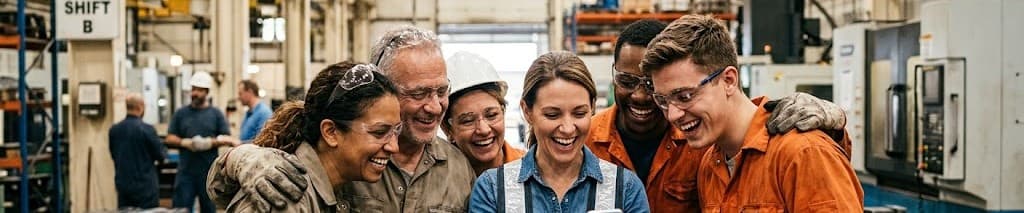
Midwest: Manufacturing Pride and Skilled Craftsmanship
Across the Midwest, blue‑collar workers continue to gravitate toward manufacturing and precision‑based skilled trades. States like Michigan, Ohio, Indiana, and Wisconsin still carry the legacy of America’s industrial heartland, and many workers take pride in roles that involve building, assembling, or repairing something tangible. Jobs such as CNC machining, welding, automotive assembly, and industrial maintenance remain highly preferred because they offer a sense of craftsmanship and stability. Many of these positions are union‑supported, providing predictable schedules, strong benefits, and long‑term security — qualities that resonate deeply in communities shaped by generations of factory work. Even as automation increases, workers in the Midwest often see these jobs as honorable, reliable, and central to their regional identity.
South: Logistics Powerhouses, Construction Booms, and Energy Opportunities
In the Southern states, blue‑collar job preferences are shaped by rapid population growth, expanding logistics corridors, and a strong energy sector. Workers in Texas, Georgia, Tennessee, and the Carolinas often seek roles in transportation, warehousing, and distribution because these industries dominate the region’s economy. Forklift operators, truck drivers, and warehouse associates are in high demand, and the constant flow of goods through major hubs like Dallas–Fort Worth and Atlanta creates steady employment.
Construction is another major draw. With new housing developments, commercial buildings, and infrastructure projects rising across the South, workers are attracted to jobs that offer consistent hours and opportunities to learn trades such as HVAC, electrical work, and plumbing. In Texas and Louisiana, the oil and gas industry continues to offer some of the highest‑paying blue‑collar roles, drawing workers who are willing to take on physically demanding or hazardous tasks in exchange for strong compensation.
West: Renewable Energy, High‑Tech Facilities, and Large‑Scale Construction
The Western United States — particularly California, Arizona, Nevada, and Colorado — has become a magnet for workers interested in renewable energy and tech‑adjacent trades. Solar panel installation, wind turbine maintenance, and energy‑efficient construction are among the most preferred jobs, driven by the region’s aggressive investment in clean energy and sustainability. Many workers are drawn to these roles not only for the pay but also for the sense of participating in the future of American energy.
At the same time, the West’s booming construction industry continues to attract heavy equipment operators, electricians, and general laborers. The presence of high‑tech manufacturing and automated facilities also creates demand for maintenance technicians who can work with robotics and smart systems. Workers in this region often prefer jobs that combine physical skill with technical knowledge, offering both stability and upward mobility.
Northeast: Maintenance, Utilities, and Food Production Stability
In the Northeast, blue‑collar workers tend to favor jobs that offer long‑term stability and strong institutional support. Industrial maintenance roles, utility line work, and public infrastructure jobs are especially attractive because they provide consistent schedules, union protection, and reliable benefits. The region’s older infrastructure — from electrical grids to transportation systems — requires constant upkeep, creating a steady stream of opportunities for skilled technicians.
Food and beverage production is another major employer, particularly in states like Pennsylvania, New York, and New Jersey. Workers appreciate the year‑round nature of these jobs, which are less vulnerable to seasonal fluctuations. Many prefer roles in packaging, machine operation, or quality control because they offer predictable routines and opportunities for overtime.
Coastal Corridors and West Coast Ports: High‑Paying Maritime and Logistics Roles
Along the West Coast, especially in California and Washington, port‑related jobs remain some of the most sought‑after blue‑collar positions. Dockworkers, crane operators, and marine mechanics benefit from strong union representation and some of the highest wages in the blue‑collar sector. Workers are drawn to these roles because they offer a combination of physical work, technical skill, and substantial overtime opportunities. Despite increasing automation, human oversight in cargo handling and equipment maintenance ensures that these jobs remain essential.
National Trends Shaping Worker Preferences
Across all regions, several themes influence what blue‑collar workers prefer in 2026. Many prioritize stability and safety over purely high wages, especially after years of labor shortages and unpredictable schedules. Training programs and certifications have become more attractive than traditional four‑year degrees, leading younger workers toward skilled trades. Digital tools — including AI‑driven job platforms — are helping workers find roles that match their skills, commute preferences, and lifestyle needs. And perhaps most importantly, blue‑collar workers are increasingly seeking visibility and community, something historically reserved for white‑collar professions.
Conclusion
The preferred blue‑collar jobs in the United States reflect the unique economic landscapes of each region. From the manufacturing pride of the Midwest to the logistics engines of the South, the renewable energy boom of the West, and the infrastructure‑driven stability of the Northeast, workers choose roles that align with both opportunity and identity. In 2026, blue‑collar workers are not simply filling jobs — they are shaping the future of American industry through the choices they make and the skills they bring to their regions.